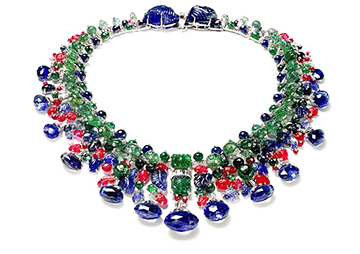
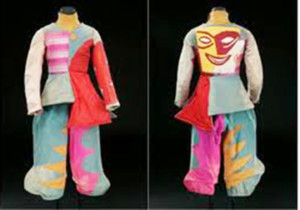
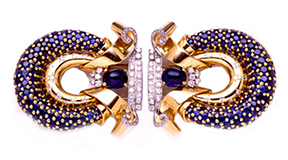
We were motivated to put together this exhibition not only because Art Deco has been an important focus of our gallery for the past 40 years, but also because there is so little coming onto the market now, and with the recent focus on contemporary design, we feel that young collectors, who do not have a great deal of opportunity to see fine Art Deco pieces, may be overlooking this great design per…
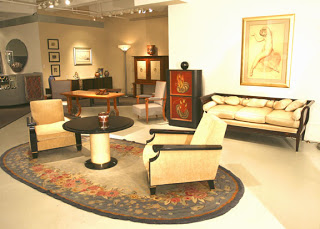
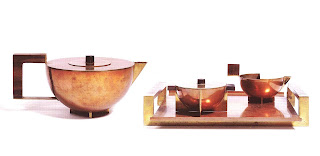
The Museum of Modern Art in New York is not the only place to see decorative objects produced by the Bauhaus. While the exhibition, Bauhaus 1919-1939: Workshops for Modernity, does include beautiful examples of metalwork created by the avant-garde art school, our own gallery exhibition, Art Deco Revisited , also features a special Marianna Brandt designed tea service (ca. 1924) that was executed b…
While the term “cocktail” was first used in 1803, and the first Bartender’s Guide was published in 1862, the first recorded actual “Cocktail Party” was given by a Mrs. Julius Walsh of St Louis, Missouri in 1917. The idea obviously caught on, as Cocktail Parties (called Drinks Parties in England) became an increasingly fashionable way to consume spirits in public, and the Cocktail Party soon became…
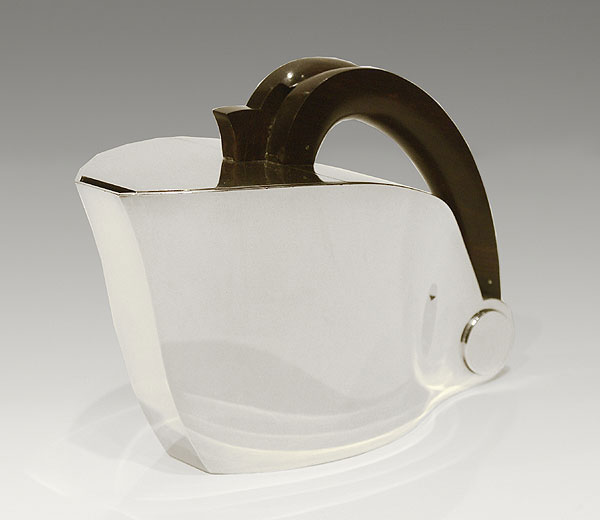
Silver objects of earlier periods are prized for their intricate forms, and the various surface embellishments of piercing, carving, chasing and other techniques. Art Deco silver and metal, however, is characterized by the total absence of this kind of surface decoration, relying instead on purity of line and perfectly polished surfaces for drama and style.
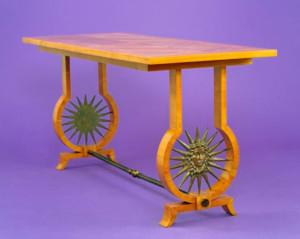
André Arbus was a decorator, furniture designer, architect and sculptor. Born in Toulouse, France, he went on to work in his father’s cabinet-making firm after graduating from the prestigious Ecole des Beaux Arts. While Arbus was not himself a cabinet maker, he was interested in form and in good design. He believed in designing furniture that was comfortable and a perfect fit for the human form. H…
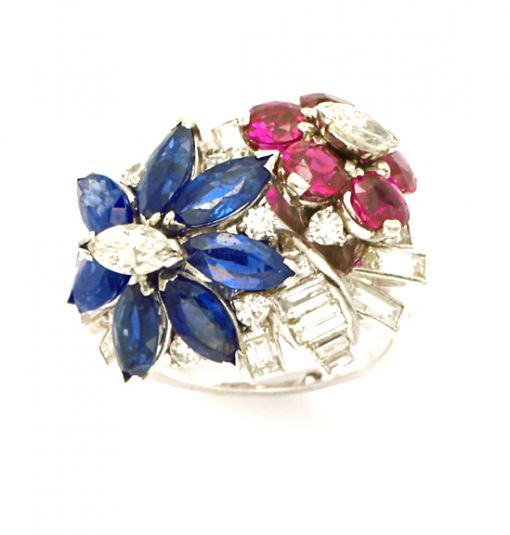
One of the most fascinating aspects of Art Deco jewelry is the diversity of stylistic elements it encompasses. While one important aspect of Art Deco jewelry is rigorously geometric, and limited in color largely to white and black, with occasional touches of color, there is another major aspect of Art Deco jewelry that is full of curves, set with colorful stones, often carved, and embellished with…
The early 20th century was perhaps unique in art history with regard to the number of radical stylistic changes that took place in a very short space of time. By 1925, we had gone from the organic, vegetal excesses of Art Nouveau to the geometric forms, sharp angles, bold colors and smooth, polished surfaces that characterize Art Deco -- from maidens with flowing hair and dragonflies to machine pa…
Jewelry of the 1930's was different from the earlier Art Deco, although there were still some geometric elements present. Yellow gold was now in favor, and the hard geometry of Art Deco became softer and more sensual. Gold was now highly polished, and often curved and fluted. Single geometric elements, such as cubes or balls were preferred to the mix of geometric elements found in much Art Deco. C…